
The Met x Pacsun: Turning Museum Archives Into Wearable Fashion
The Met x Pacsun collaboration shows how an institution can turn its archive into a modern apparel platform without making the result feel like traditional museum gift-shop merch. The current collection pulls from drawings, prints and paintings spanning the 17th through 20th centuries, translating them through contemporary silhouettes, embroidery, graphics and fashion-focused styling. Pacsun describes the season as a celebration of nature, with everything from floral studies to landscapes becoming wearable design assets.

Target Audience
The collection primarily speaks to Gen Z and younger millennial consumers interested in fashion, art, streetwear and culture.
Pacsun gives The Met access to a younger fashion audience, while The Met gives Pacsun an enormous archive of recognizable and lesser-known artwork to build around. The assortment extends across men's, women's and kids' categories, allowing the collaboration to operate more like a lifestyle collection than a limited graphic tee release.
Key takeaway: Your brand's existing assets may be more valuable than creating something entirely new. Archives, illustrations, photography, packaging and historical graphics can all become starting points for apparel.
Trends
Several current apparel and branding trends run throughout the collection:
Archive-driven design: Historic artwork becomes the graphic language of the collection.
Art as the hero: The imagery often receives more visual space than either brand's logo.
Contemporary silhouettes: Baggy shorts, barrel jeans, cropped tops, relaxed outerwear and halter silhouettes keep centuries-old artwork feeling current.
Nature motifs: Florals, butterflies and landscapes create visual consistency across otherwise different pieces.
Mixed decoration: The collection moves between printed artwork and embroidery rather than relying on one decoration technique.
Subtle secondary branding: Small The Met logos, chest embroidery and back marks often support the artwork instead of competing with it.
Museum merch as fashion: The product is designed to work as everyday apparel first and cultural merchandise second.
Brand Strategy
The strength of the collaboration is that Pacsun does not simply put The Met logo on Pacsun basics. It treats The Met's collection as a creative library.
That gives both brands something useful. The Met reaches consumers who may interact with its art through fashion before ever visiting the museum, while Pacsun gains access to centuries of artwork that competitors cannot easily replicate.
The product mix also balances art-forward pieces with simpler logo-driven apparel, creating entry points for customers who want a statement graphic and those who prefer quieter branding.
Merch takeaway: A strong collaboration should unlock assets that one brand could not create on its own.
Designs

Flower Garden T-Shirt
A navy 100% cotton tee featuring Winslow Homer's Flower Garden and Bungalow, Bermuda from 1899. The artwork becomes the front graphic while The Met logo sits at the upper back. It is a simple example of letting the content carry the garment instead of over-branding it.

Butterfly Zip-Up Hoodie
The black fleece hoodie translates details from Jan van Kessel's 1664 Insects, Butterflies, and a Grasshopper. New York embroidery appears on the front while butterfly artwork and The Met branding take over the back through embroidery.

Claude Monet Halter Top
Instead of placing Monet artwork on another standard graphic tee, Pacsun applies View of Vétheuil from 1880 to a fitted, cropped halter silhouette with an open back. The Met logo is reduced to a small mark near the hem.

Uniform Jean Jacket
One of the collection's quieter pieces. The rigid 100% cotton denim jacket uses a relaxed silhouette, contrast stitching and small The Met embroidery at the chest rather than artwork covering the garment.
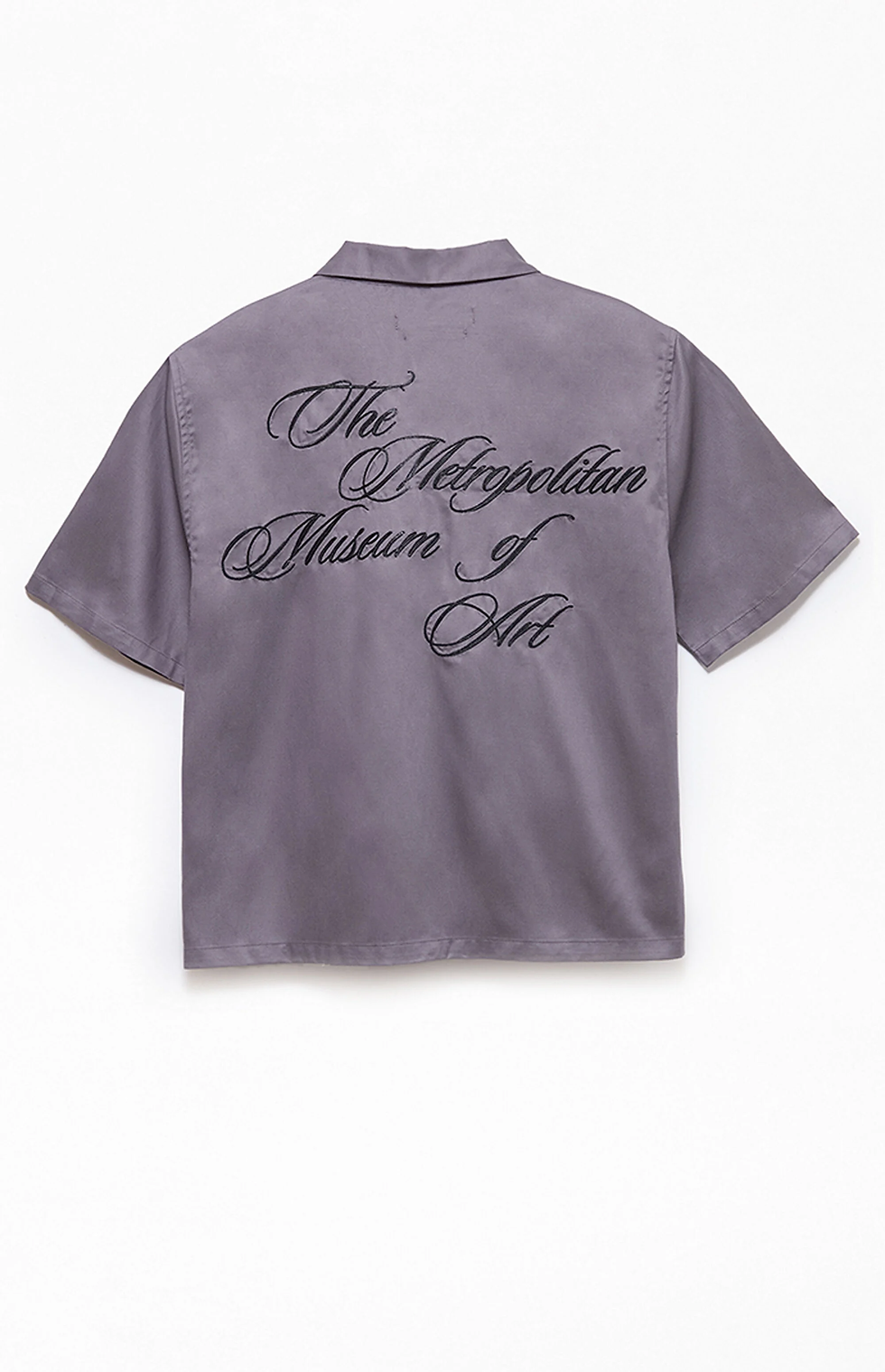
Passion Chore Camp Shirt
The relaxed camp shirt uses The Met embroidery on the chest and script embroidery across the back. With a Tencel-cotton blend and chore-inspired silhouette, it shows how branded merchandise can communicate identity without requiring a large graphic.
Apparel Collection Offerings
The collection extends well beyond graphic tees:
Category | Representative Retail Price |
Graphic Tees | Around $35 |
Women's Fashion Tops | Around $36-$40 |
Hoodies | Around $70 |
Camp / Chore Shirts | Around $54 |
Shorts | Around $54 |
Jeans | Around $63 |
Denim Jacket | Around $135 |
Pacsun also lists hats, swimwear, skirts, sweat shorts, kids' apparel and other pieces within the broader Met assortment. Prices and availability vary as products move into markdown.
Lessons from the Collab
The Met x Pacsun collection shows that great branded apparel does not always need more branding. Sometimes it needs better source material.
The Met already owns an extraordinary visual archive. Pacsun's job is to translate that equity into silhouettes its customer already wants to wear.
The formula is worth borrowing:
Start with existing brand assets → identify a strong visual theme → translate those assets into current silhouettes → vary the level of branding across the collection → let a few pieces prioritize design over logos.
The result feels less like merchandise promoting The Met and more like fashion that happens to bring The Met along with it.


