
Ulta Beauty x Pacsun: When Beauty Becomes Wearable Branding
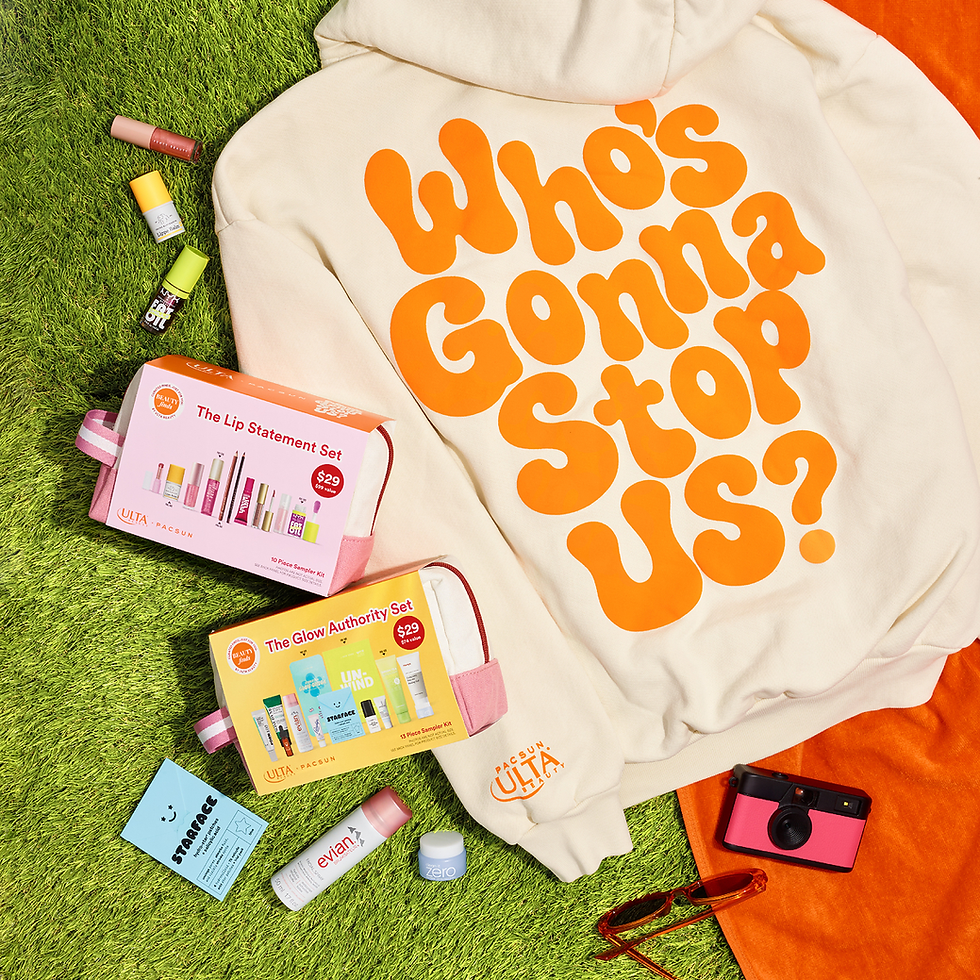
The Ulta Beauty x Pacsun collaboration brings two categories that increasingly share the same consumer into one campaign: fashion and beauty. Rather than building a large apparel capsule, the brands created a focused collection around two curated beauty kits and one limited-edition statement hoodie.
The collection debuted at Pacsun’s SoHo store on July 28, 2026, before expanding to more than 100 Pacsun stores and online on August 6. The hoodie also launched through Ulta Beauty and TikTok Shop, giving the apparel piece distribution well outside Pacsun’s traditional retail environment.
What the Collaboration Includes
The collection is centered around two curated beauty kits and a limited-edition Pacsun x Ulta Beauty hoodie.
The Lip Statement Set includes products from brands such as Anastasia Beverly Hills, Drunk Elephant, Fenty Beauty, NYX Professional Makeup, Milani, Tarte, Kaja, Stila, e.l.f. Cosmetics, and Unleashia. The Glow Authority Set focuses on skincare and includes products from Starface, La Roche-Posay, TONYMOLY, Vichy, The INKEY List, Banila Co, and other recognized beauty brands. Both sets are currently listed at $29 through Ulta Beauty.
The apparel component is an exclusive hoodie featuring the phrase “Who’s Gonna Stop Us.” Instead of treating the garment as a basic piece of event merchandise, the collaboration uses it as the visual summary of the campaign. It takes Ulta’s message about rewriting beauty rules and translates it into something customers can wear beyond the beauty aisle.
Target Audience
The collaboration targets Gen Z and younger consumers who see fashion and beauty as parts of the same personal style routine.
There is significant audience overlap between the brands. Pacsun already operates around youth fashion, streetwear and cultural collaborations, while Ulta Beauty reaches consumers through cosmetics, skincare and beauty discovery.
Instead of forcing a connection between unrelated brands, the partnership is built around something both audiences already value: self-expression. Pacsun described the partnership around confidence and individuality, while Ulta positioned it as an extension of its “Rewrite the Rules” summer campaign.
Merch takeaway: Look beyond brands within your own category. Some of the strongest collaborations happen when two companies serve the same customer in different parts of their lifestyle.
Trends
Several larger merchandising and branding trends show up in the collaboration:
Cross-category collaborations: Fashion and beauty are presented as one lifestyle rather than separate purchases.
Statement messaging: The apparel leads with a campaign phrase instead of a traditional corporate logo.
Limited-edition drops: Scarcity gives a relatively small collection more cultural weight.
Neutral garment + bold accent: The cream-toned hoodie provides a clean base while bright orange connects visually back to Ulta Beauty.
Lifestyle merchandising: Apparel sits alongside cosmetics instead of existing in a separate merchandise program.
Omnichannel drops: The hoodie appears across Pacsun, Ulta Beauty and TikTok Shop rather than relying on a single branded storefront.
Experience-led launches: Pacsun’s SoHo activation paired the collaboration with a beauty station, branded photo moment and product giveaways.
Distribution Designed for Discovery
The rollout moves through several channels, each serving a different purpose.
The initial SoHo release gave the collaboration a physical launch moment in one of New York City’s most visible shopping neighborhoods. The expansion into more than 100 Pacsun locations provides national reach without making the capsule feel completely mass distributed. Ulta’s website and select stores bring the products to its existing beauty audience, while TikTok Shop places the collection directly inside a platform where younger shoppers discover trends and products.
This distribution model allows the collaboration to travel across fashion retail, beauty retail, e-commerce, social commerce, and physical events without requiring an enormous assortment.
The lesson is useful for brands planning collaborative merchandise: the number of products does not have to be large when the number of relevant customer touchpoints is.
Why the Collaboration Works
The partnership works because it is based on a shared customer behavior rather than a forced similarity between the companies.
Pacsun customers are already thinking about personal style. Ulta customers are already using beauty to shape how they present themselves. The collaboration recognizes that getting dressed and getting ready are no longer separate shopping journeys.
It also gives each brand something it does not fully own alone. Ulta gains access to a fashion-first environment and Pacsun’s younger audience. Pacsun gains beauty expertise and an assortment of recognizable products without having to build a full beauty operation from scratch.
The hoodie then becomes the collectible object that proves the collaboration happened. It turns an assortment of existing beauty products into a branded capsule with its own identity.
Key Takeaways
Use apparel to connect different product categories. A co-branded garment can create one visual identity around products that would otherwise feel unrelated.
Build the collaboration around a shared customer. The strongest partnerships begin with overlapping behaviors, interests, or lifestyles rather than two large logos looking for somewhere to sit.
Give the apparel a message of its own. “Who’s Gonna Stop Us” works beyond the partnership. Customers can relate to the statement without needing to explain the campaign.
Let each channel play a different role. Flagship launches create attention, retail stores create access, e-commerce creates convenience, and social commerce creates discovery.
Keep limited collections focused. Two curated kits and one hero apparel piece can create a stronger campaign than a large assortment with no central idea.
Treat the garment as lasting media. Beauty products may create the initial purchase, but the hoodie can continue carrying the collaboration into schools, campuses, airports, social posts, and everyday life.
The larger takeaway is that apparel can do more than accompany a collaboration. When the design captures the shared attitude behind both brands, it can become the product that makes the entire partnership feel real.
What This Collaboration Teaches Us About Wearable Branding
Ulta Beauty x Pacsun shows that merch can connect categories, not just advertise brands.
The hoodie gives a beauty collaboration something physical consumers can wear long after the products inside the beauty kits are gone. At the same time, Pacsun does not try to turn Ulta into a streetwear label overnight.
Instead, the brands find one shared idea, build one recognizable apparel piece around it and distribute it wherever their audiences already shop.
The formula worth borrowing:
Find the shared consumer → identify the shared message → create one strong wearable → connect it to a larger product experience → distribute it across both brand ecosystems.
Sometimes a tight merch strategy with one memorable piece can say more than a 20-SKU collection.


